
On Loss and Life
A Lenten/Eastertide Reflection

“Can I look again?”
“Okay. Just one more time though.”
My dad picked me up to look in the casket. Inside was grandpa. He was serene, a smile tugging gently at the corner of his mouth. He could have been dreaming.
My father lowered me to the floor, and we returned to our place at the back of the funeral home.
I remember it being quiet, sitting there on my father’s lap. People shuffled in and out of the viewing room, the faux-wood paneling giving the space a dark, cozy feel.
After a time, I turned to my father and asked the troubling, unanswerable question: “What happened to grandpa?”
This was the continuation of a conversation we had been having for some time. Only three years old, I was struggling to understand the implications of death. I knew something had happened to grandpa. Something that made all the grown-ups sad. And somehow grandpa was here, but not here at the same time.
My poor dad was left to explain this complicated reality to me, while my mother mourned the death of her father.
I gathered that grandpa was somewhere up there. But this fact was difficult to reconcile with the body in the casket, hence my desire to look again and again.
His body was in the casket, but something else, his soul, his insides, were up there?
“Can we go upstairs to see them?” I looked up at the ceiling, envisioning my grandpa’s organs stored somewhere on the second floor. I could also see the stairs. Maybe we could go up and look.
“Not quite,” my dad said, restraining me gently on his lap. “Not quite.”
The death of my grandpa was the first major experience of loss that I can remember. For a young mind beginning to wrestle with the finality of death, there was no real sense of grief. No sharp pain at the rupture of relationship. Just a little boy, confused, seeking understanding.
They say he and I were thick as thieves, buddies, ride-or-die companions. But how much do these concepts mean to a child just stepping into life. Now, when I look at the pictures of us together, I can see the affinity we had for one another. When I listen to my mother retell her memories, I can hear the love.
It is in the present that I feel the sting of his death more keenly, the hole that he left in our family more apparent. I see all the years that we did not get to spend together. I wonder what our relationship might have been like had he lived a little longer. Yet, my grandfather’s legacy and the foggy memories of young boy have been insightful companions on my journey with loss, instructive as I’ve continued to mediate on how it impacts our lives.
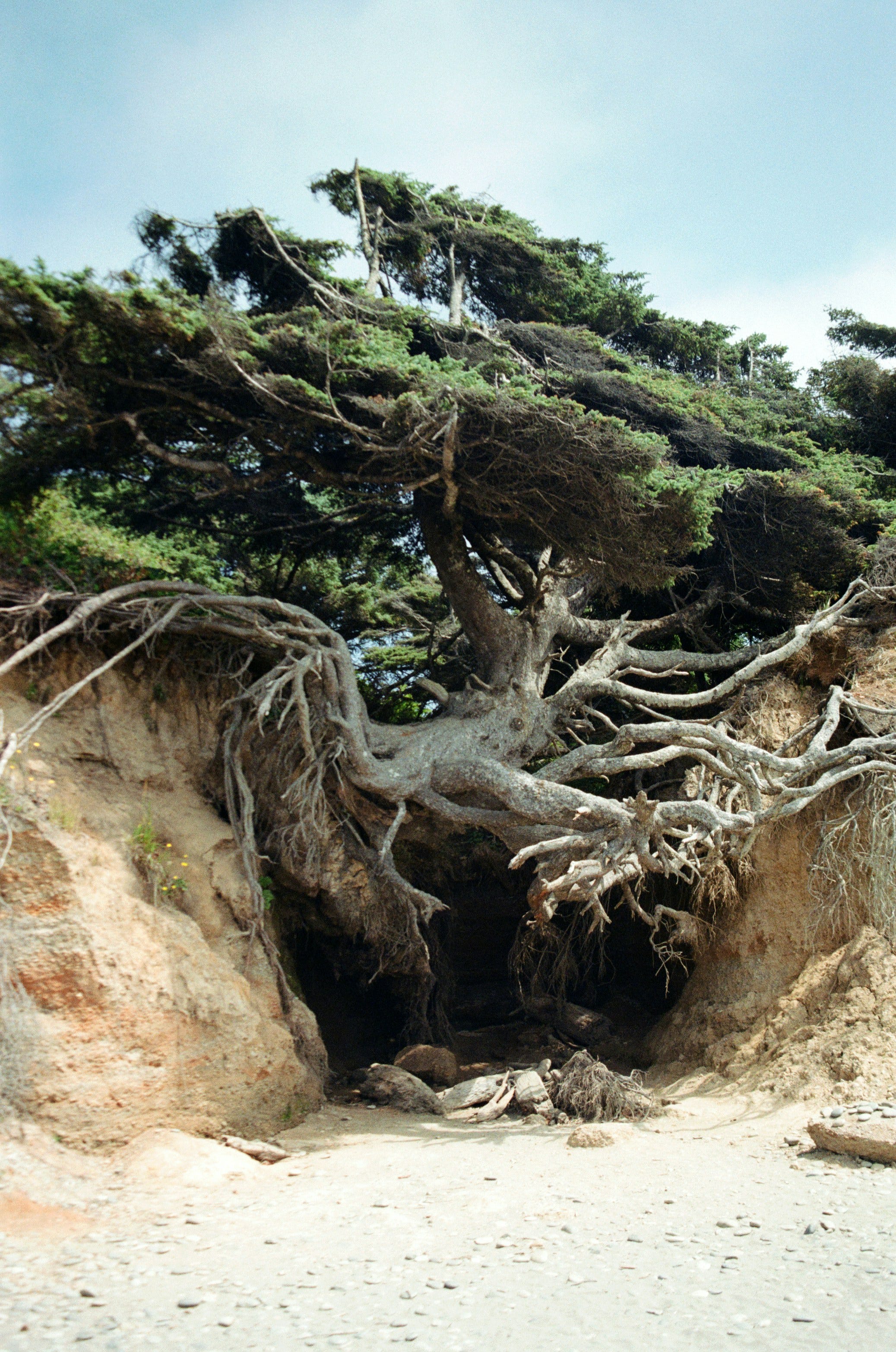
I’ve found that our hearts are like the roots of a tree, growing, digging down into the soil of experience to find our foundation. We form attachments, wrapping the roots of our love around people, places, objects and dreams. But sometimes, the objects of our attachment, the sources of our affection, disappear. We’re forced to move. The special toy is broken. The dream is killed. Or a loved one, like my grandpa, dies.
In the forest, the stones beneath a tree can be knocked aside, leaving a gap, a cavity, an empty space. The tree is destabilized as its foundation is ripped apart. We are much the same in the wake of loss. The space that remains becomes a cavity, a hollow ache for what is missing.
If allowed to remain empty, it can become a cavity of sorrow. But it can also become a space for something new to grow. Where the stone was rolled away resurrection is taking place.
It is the paradox of our Christian faith that joy can emerge from sorrow; that life can emerge from death. But it is the promise of our faith that these realities are the truth. In his resurrection, Jesus demonstrates the previously incomprehensible nature of the Kingdom of God. Loss is not the end. The cavity that remains need not stay empty. Life emerges from the tomb.
In the forest, the empty space beneath the tree does not stay empty for long. The roots fold in, the tree digs deeper into the dirt. The space is filled with new purpose and life.
While this is a message of hope, it may be hard to see through the terrible destabilization of loss. That is normal.
It is okay if it takes some time for new life to come into focus.
Healing happens in its own way. Like all things that grow, it can’t be rushed. New roots take time to sink their fingers down into the soil of meaning. Our ancestors model this for us in the Psalms of lament. The Israelites never force the healing process. They wait, stubbornly and prayerfully for God to fill in the cavity of their loss. Because only God can.
While my relationship with my grandpa does not exist in the way it might have if he were still alive, it still continues. The bond of our attachment is just different. I savor the memories, the pictures, keepsakes, and rituals remembrance in a new way, remaining connected to my grandfather through the promise of resurrection life. These are new roots digging down into the ground of meaning.
I believe that this is the promise of our faith, the promise of God demonstrated in the resurrection of Christ. Loss is not the end. The cavity of emptiness will not leave us hollowed out in sorrow forever. Like a dead man walking from a tomb, life can emerge from the unlikeliest of places.